Bottom line
Measure the exact location first, then choose the smallest bin that comfortably holds the waste produced between collections. A removable inner bucket, easy-to-clean lid, common bag size, and stable pedal usually matter more than sensors or deodorizer cartridges. If your household separates recycling or food scraps, plan the full station instead of buying one oversized can.
Capacity labels are only a starting point. Shape, lid hardware, liner overhang, and the way bags fill determine how much the can holds in daily use. Buy for the room and collection schedule, not the largest number on the box.
Start with measurements
Record width, depth, and available height with cabinet doors, drawers, dishwasher, and refrigerator fully open. Add room for the lid to swing or the can to slide out. A narrow can may fit beside an island but become unstable; a deep can may block a walkway once the pedal is pressed.
Use painter tape to mark the footprint on the floor for a day. Walk through the kitchen, open every nearby door, and carry a full grocery bag past it. This catches clearance problems that product photos hide.
Match capacity to the household
| Use pattern | Better starting point | Trade-off |
|---|---|---|
| Small household, frequent collection | Compact single bin | More frequent bag changes |
| Family kitchen | Medium or large step can | Needs a stable footprint |
| Trash plus recycling | Two-bin station or matched separate cans | Less capacity per compartment |
| Food-scrap diversion | Small lidded caddy plus main bin | Requires frequent emptying |
| Under-counter use | Pull-out or short can | Hardware reduces usable volume |
Choose a lid mechanism
A step pedal works with messy hands and has no batteries. Test whether the base stays planted and the lid closes gently. A swing lid is simple but can touch waste and reduces the opening. A manual lift lid is inexpensive but requires a free hand. Open-top cans are fast yet offer less odor and pet control.
Motion sensors are convenient when they work, but add batteries, electronics, and false openings in busy walkways. Check whether the lid can still be opened manually when power is unavailable and whether replacement parts exist.
Odor control is mostly waste management
A tight lid can slow odor spread, but it cannot make wet food waste disappear. Drain liquids, wrap strong-smelling waste when appropriate, empty the can before odors build, and clean spills immediately. An oversized bin encourages waste to sit longer.
EPA guidance recommends preventing edible food waste where possible and composting suitable scraps where local systems allow. A small food-scrap caddy that is emptied often can reduce odor in the main trash can more effectively than a scented cartridge.
Inner bucket or bag-holding rim?
A removable bucket makes it easier to carry leaks to the sink and wash the entire interior, but it consumes space and adds weight. A bag-holding rim uses more of the shell volume and hides liner edges, but a torn bag can soil the body of the can.
Check that the bucket clears the lid without awkward angles and that replacement liners are ordinary sizes. Proprietary bags can fit beautifully but raise ongoing cost and create a supply dependency.
Materials and finishes
Plastic is light, resists dents, and is easy to rinse, though it can absorb odor or look worn. Stainless-steel shells feel stable and suit many kitchens but show fingerprints and can dent. A fingerprint-resistant coating helps only if it tolerates the cleaners you use.
Inspect seams, pedal pivots, hinges, and sharp edges. The mechanism is more likely to end the product life than the outer shell, so warranty and available parts matter more than decorative finish.
Plan sorting before capacity
Local recycling and organics rules decide what compartments you need. A divided can saves floor space but may give too much volume to one stream and too little to another. Separate cans are easier to resize later and can be placed where each waste type is created.
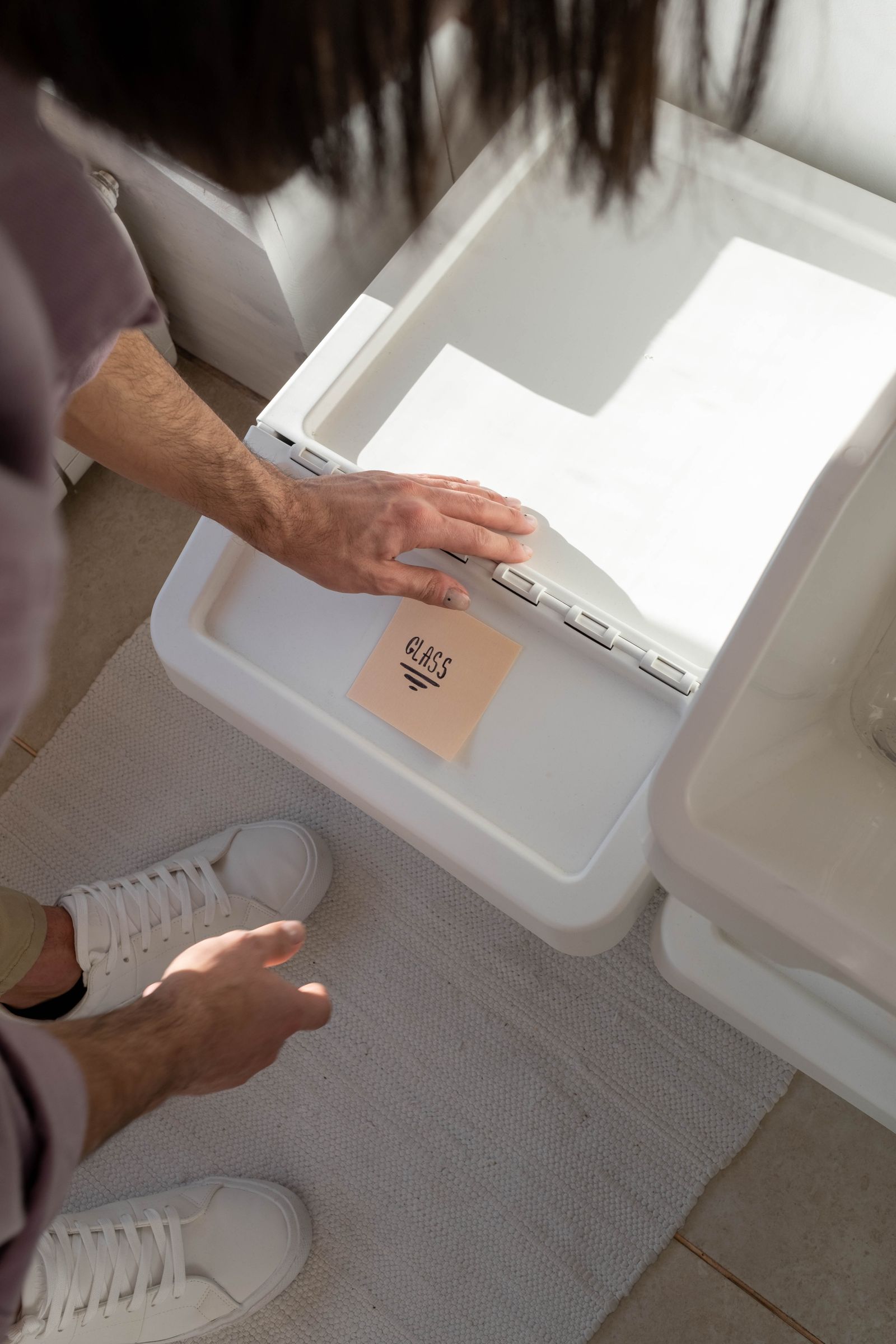
Label compartments clearly for guests and children. If the openings are identical, removable color labels can reduce contamination without locking the kitchen into a permanent design.
Cleaning checklist
- Remove the liner before it is packed beyond the rim.
- Wipe fresh spills immediately with a cleaner allowed by the manufacturer.
- Wash a removable bucket and dry it fully before adding a new bag.
- Clean the underside of the lid, pedal area, and bag-retaining rim.
- Do not spray electronic sensor housings or battery compartments.
- Replace cracked buckets, sharp hardware, or mechanisms that no longer close safely.
Common mistakes
- Buying by gallons without measuring the footprint.
- Ignoring the lid height under a counter.
- Choosing a huge can for a household that produces wet food waste.
- Assuming custom liners will always be easy to buy.
- Placing a sensor can where people constantly pass it.
- Forgetting how a full inner bucket will be lifted and washed.
FAQ
What size should a kitchen trash can be? The right size holds normal waste until collection without encouraging overfilling or long storage. Measure both space and actual weekly bag volume.
Are stainless-steel cans more hygienic? Hygiene depends on smooth cleanable surfaces and routine. Material alone does not replace washing and drying.
Do odor filters work? They may reduce some odor, but source control, timely emptying, and cleaning matter more.
Is a dual-compartment can worth it? Yes when the compartment ratio matches your trash and recycling volume; otherwise separate bins are more flexible.
Sources
- US EPA, Preventing Wasted Food at Home — https://www.epa.gov/recycle/preventing-wasted-food-home
- US EPA, Composting at Home — https://www.epa.gov/recycle/composting-home